Why do an US fellowship?
Clinical ultrasound has proven to be the new frontier in medicine, with emergency medicine leading the way. The ability to guide real time decision making and therapy has lead to the adoption of clinical ultrasonography by nearly every specialty. EM residency training has done an excellent job in providing a basic framework for developing ultrasound skills, and many residents are graduating with extraordinary skills. Fellowship offers the opportunity to expand on this base knowledge, and create leaders in the field with specific focus on education, research and administration of a successful ultrasound program.
Why train at VCU?

Thank you for your interest in the VCU EM Ultrasound Fellowship! As the region’s premier ultrasound fellowship, we offer an experience that is designed to produce leaders in field of clinical emergency and critical care ultrasound.
The well-established Division of Ultrasound, within the Department of Emergency Medicine, is fully integrated into the EM residency education, Department of EM education and quality initiatives, the VCU School of Medicine, and within the VCU Health System’s enterprise point-of-care ultrasound initiatives. Our faculty play key roles at every level as it relates to ultrasound at the bedside. As a fellow, you will have a chance to experience and learn firsthand what it takes to manage a comprehensive ultrasound program from nationally recognized experts.
ACEP’s Clinical Ultrasound Accreditation Program (CUAP)
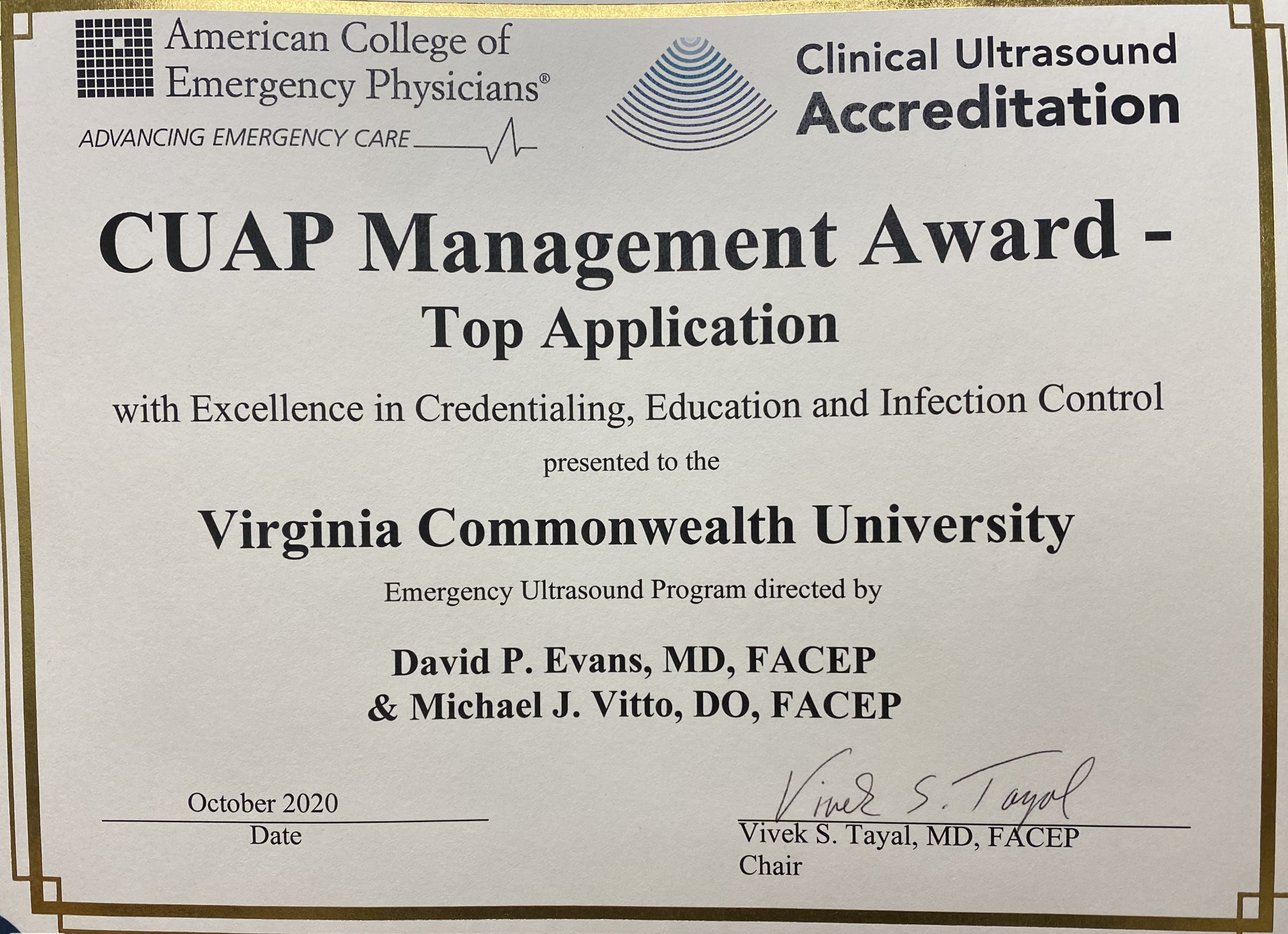
The Ultrasound Program at VCU is one of only 45* programs in the country to be accredited by the ACEP CUAP. This accreditation program recognizes VCU as meeting the high quality, safety, and program implementation standards in emergency, point-of-care, clinical ultrasound established by the American College of Emergency Physicians. In addition, to being one of the first accredited programs, VCU Ultrasound won the 2020 CUAP Top Management Award for excellence in credentialing, education and infection control.
*as of 2021
Emergency Ultrasound Fellowship Accreditation Council (EUFAC)
The Ultrasound Fellowship at VCU was accredited by the EUFAC during the initial roll out in 2020. The EUFAC standards provide a foundation for excellence in training. Programs must demonstrate that they meet established standards, but may also emphasize additional resources, experiences, expertise or outstanding achievements at their program. EUFAC-accredited Advanced Emergency Medicine Ultrasound fellowships are recognized as the top ultrasound training programs for emergency physicians. Only fellowship graduates from EUFAC accredited programs can sit for certification through the American Board of Emergency Medicine.
Focused Practice Designation (FPD)
ABEM offers a Focused Practice Designation (FPD) in Advanced EM Ultrasonography.
The FPD recognizes expertise held by emergency physicians with sophisticated, comprehensive knowledge of advanced emergency ultrasonography. While residency-trained emergency physicians have acquired basic expertise applying ultrasound in the emergency department, those physicians who specialize by doing a fellowship in ultrasound will have acquired a greater breadth and depth of knowledge in advanced techniques, research, and quality improvement skills.
The FPD is available only to ABEM-certified physicians who have completed an EUFAC accredited fellowship such as the one offered at VCU (or training-plus-practice pathway for those who completed fellowship prior to establishment of EUFAC).
Example Curriculum
The following is a basic outline of the didactic topics covered during the fellowship year. Other educational initiatives that are longitudinal throughout the year include a robust QA program, an administrative lecture series, weekly journal club, and a grand rounds series.
Month 1 (Jul) Introduction & Basic Ultrasound Physics
Month 2 (Aug) Transducers And Imaging Instruments
Month 3 (Sep) Doppler Effect, Color & Spectral Doppler, Imaging Artifacts, & Safety
**Spi Exam**
Month 4 (Oct) Liver, Spleen, Gallbladder, Biliary Tree, & Pancreas
Month 5 (Nov) Abdominal Wall, Gi Tract, Retroperitoneum, & Abdominal Vascular
Month 6 (Dec) Kidneys, Bladder, Scrotum, Prostate, Neck, Thyroid & Breast
**RDMS Exam**
Month 7 (Jan) Cardiac Anatomy, Physiology & Echo Technique
Month 8 (Feb) Cardiac Anatomy, Physiology & Echo Technique
**RDCS Exam**
Month 9 (Mar) Valvular Heart Disease
Month 10 (Apr) Pericardial & Hypertensive Disease, & Cardiomyopathies
Month 11 (May) Ventricular Function, Doppler, Aortic Disease & Miscellaneous
Month 12 (Jun) MSK & Vascular
**As we transition away from the ARDMS exams towards the FPD in 2022, we will continue to offer those exams on an optional basis, as they are a useful standardized benchmark for basic sonography skills and knowledge.
Fellow Educational Agreement
The following document outlines the minimum fellowship requirements as outlined by the EUFAC and serves as the educational contract between the fellowship and the fellow.
Technology
At VCU we take advanced technology seriously.
Our Emergency department currently has 7 Sonosite Xporte machines, with plans for a full fleet turnover in the fall of 2021 . All the machines have 3 probes – a curvilinear, phased array and high frequency linear. There is also a large footprint linear probe kept in the fe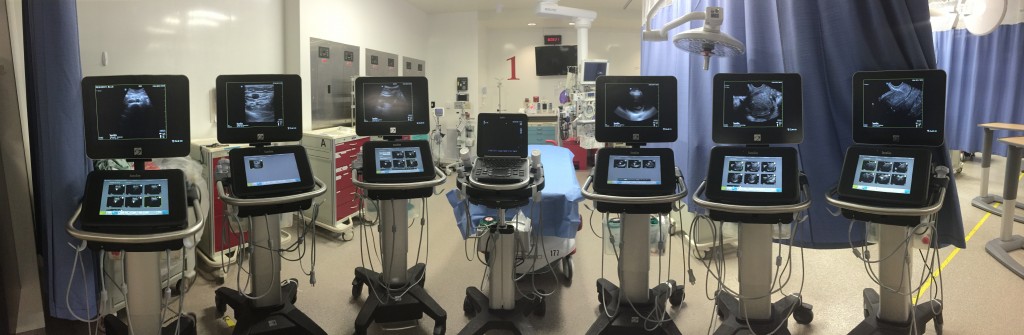 llow’s office for research purposes. All our machines are connected wirelessly to qpath, which allow for instantaneous image uploading for viewing at any computer. Our qpath system is connected to our electronic medical record, and you can create reports and send the image to PACs.
In addition, you will you have the ability to participate in our world class resuscitation program where you will play an intricate part of the resuscitation team. We have recently purchased two brand new TEE probes compatible with our Xportes, and you will have the opportunity to perform advanced TEE real time during active resuscitations.
A Week in the Life of a Fellow
Below gives an idea of what a typical week may look like for an ultrasound fellow.
Sunday: Independent study
Monday: QA day (approx 200 studies required to be QA’d/month)
Tuesday: ED shift 2p-10p Main Campus
Wednesday: Didactic day
- 8A-1P Resident Conference – frequency lectures, small groups, simulations
- 1P-2P Group QA
- 2P-3P Journal Club and Fellow Lecture Series
- 3P-4P Research and Division Meeting
- 4P-5P Fellow Scanning
Thursday: Scanning Shift (Approx 20hrs/month required)
Friday: ED shift 7a-7p New Kent Freestanding ED
Saturday: Independent Study/OFF
The city (Richmond, VA)
Richmond is located only 2 hours from the majestic Blue Ridge Mountains as well as from the famous Virginia Beach Oceanfront. But what many people learn once they move here, is that the city itself has all you could ever want. Recently voted Best River Town by Outside Magazine, and continually receiving nominations as best place place to live, voted a Top Destination for Food Travel by National Geographic and many more, this is a place you will quickly fall in love with.
Fellows enjoy rock climbing, biking, hiking, surfing, kayaking, and numerous other outdoor activities. Not into outdoor stuff? Richmond offers a flourishing cultural community enhanced by several first-class museums and prominent universities, its own symphony, professional ballet and opera, and numerous theater companies and art galleries.
How to apply
Prosepective fellows will need to apply through the EUS central application service. Fellows accepted for interview will contacted to schedule. Any questions, feel free to email or call.
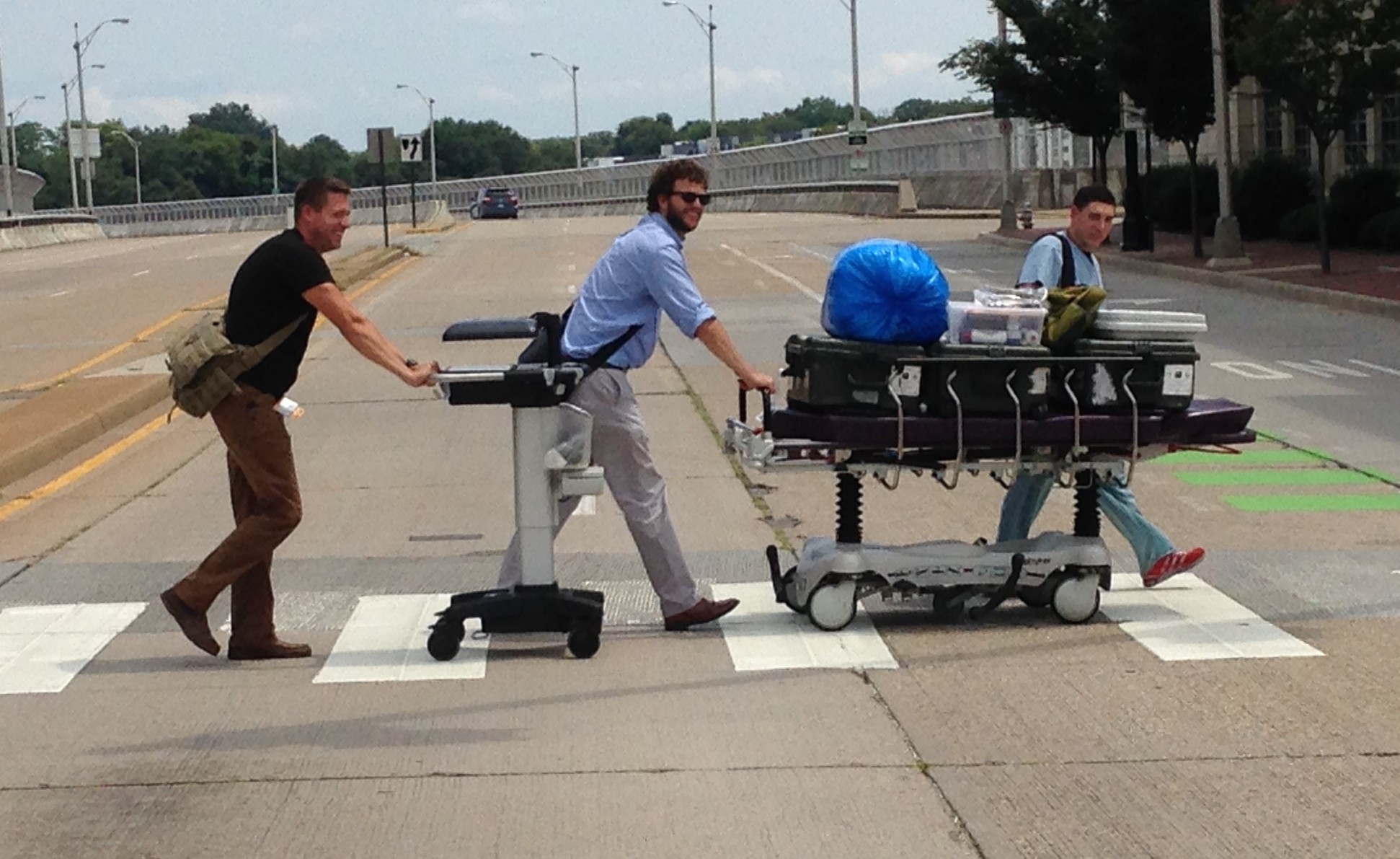
Some days you just need to get outside and scan!
 VCU Ultrasound
